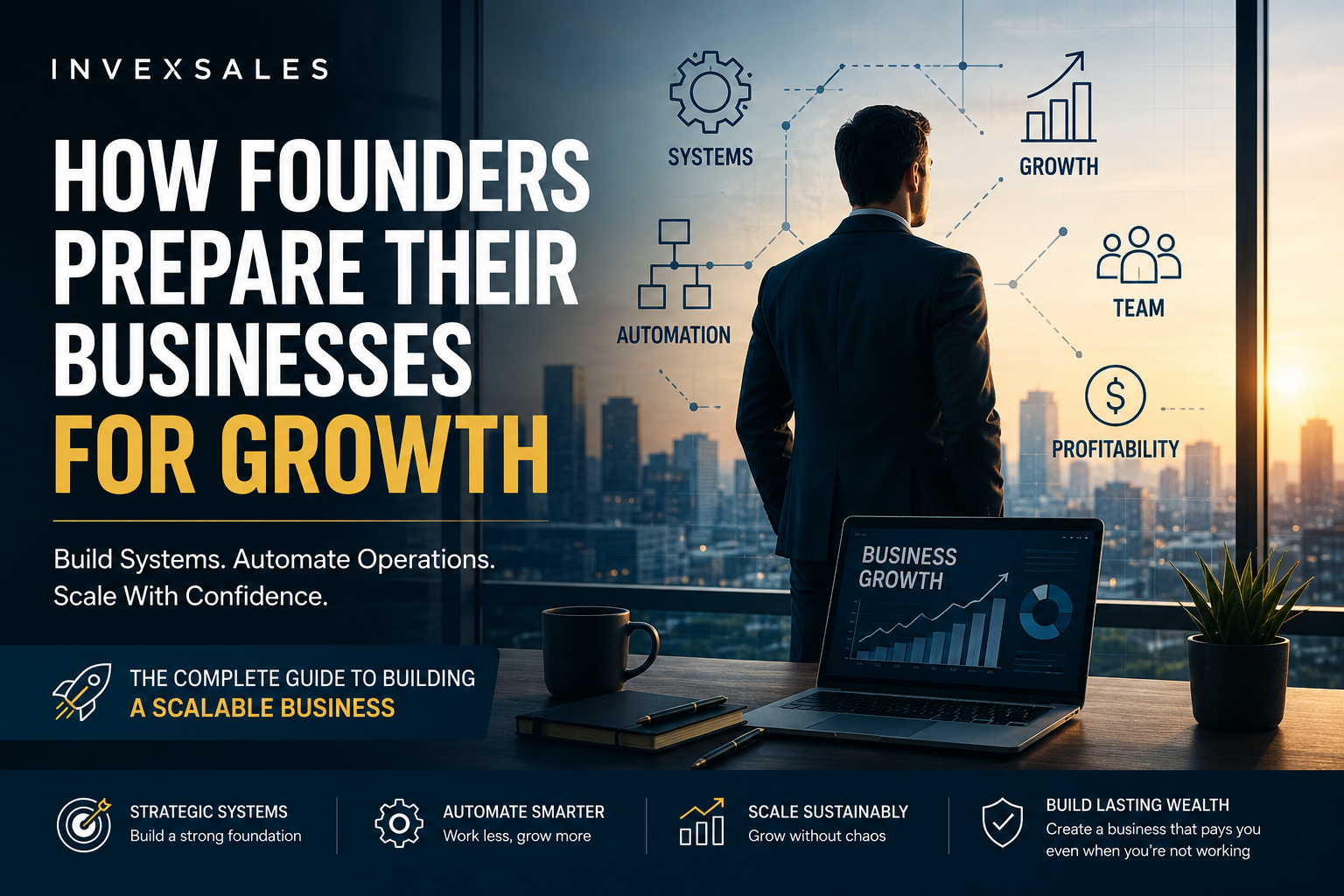
How Founders Prepare Their Businesses for Growth: The Complete Guide to Building a Scalable Company
Introduction: Growth Is Not the Same as Scalability
Every entrepreneur dreams of growth.
More customers. More sales. More employees. More revenue.
But growth alone is not enough.
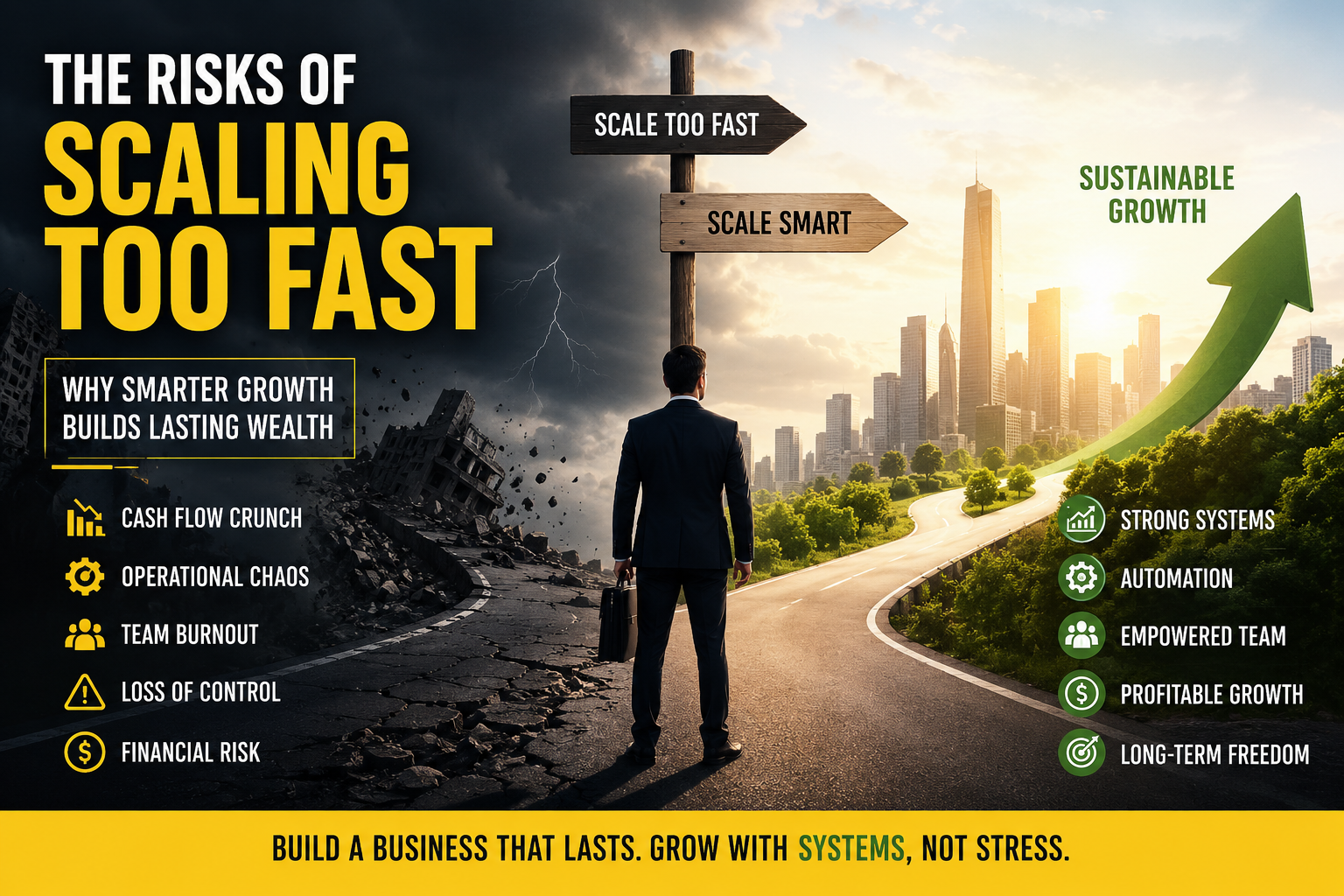
Thousands of businesses experience rapid growth only to discover that increased sales create even bigger problems. Customer complaints rise. Operational costs explode. Teams become overwhelmed. Cash flow becomes unpredictable.
The reality is simple:
Growth without systems creates chaos.
Scalable companies understand something that most entrepreneurs overlook: before growth happens, the business must be prepared to absorb it.
The companies that successfully scale are not necessarily the most innovative. They are often the most organized.
They build systems before they desperately need them.
They automate processes before operations become overwhelming.
They create predictable structures before complexity arrives.
In this guide, you’ll learn how successful founders prepare their businesses for sustainable growth and why business systems, automation, and operational architecture are often the difference between companies that scale and companies that collapse under their own success.
Why Most Businesses Struggle When Growth Arrives
Many entrepreneurs believe their biggest challenge is acquiring customers.
In reality, the bigger challenge is serving more customers efficiently.
A business may generate:
- More leads
- More orders
- More projects
- More employees
Yet become less profitable.
Why?
Because growth amplifies weaknesses.
If your sales process is disorganized today, it becomes a nightmare at scale.
If your financial management is weak today, growth can quickly create cash flow crises.
If your operations depend entirely on the founder, expansion becomes impossible.
Growth acts like a magnifying glass.
It exposes every weakness hiding inside your business.
This explains why many founders find themselves working longer hours despite generating higher revenue.
They built growth.
But they failed to build scalability.
The Difference Between Growth and Scalability
Understanding this distinction is critical.
Growth
Growth means increasing revenue by increasing effort.
Examples:
- Hiring more people
- Working more hours
- Spending more on advertising
- Managing more projects manually
Growth often increases complexity.
Scalability
Scalability means increasing revenue without proportionally increasing effort.
Examples:
- Automated sales systems
- Standardized processes
- Digital products
- Automated customer onboarding
- Repeatable workflows
Scalable businesses leverage systems instead of relying entirely on human effort.
This is why companies such as software businesses, subscription businesses, and digital product companies often scale faster than traditional service businesses.
Their systems do most of the work.
The First Step: Building a Business Operating System
Every scalable company operates through systems.
Think about the human body.
The body functions because multiple systems work together:
- Nervous system
- Circulatory system
- Respiratory system
Businesses operate similarly.
A company requires systems for:
- Sales
- Marketing
- Finance
- Customer service
- Operations
- Reporting
Without these systems, growth becomes unpredictable.
One of the biggest mistakes entrepreneurs make is trying to manage everything manually.
Instead, founders should focus on designing repeatable workflows that can function independently.
This concept is explored extensively in:
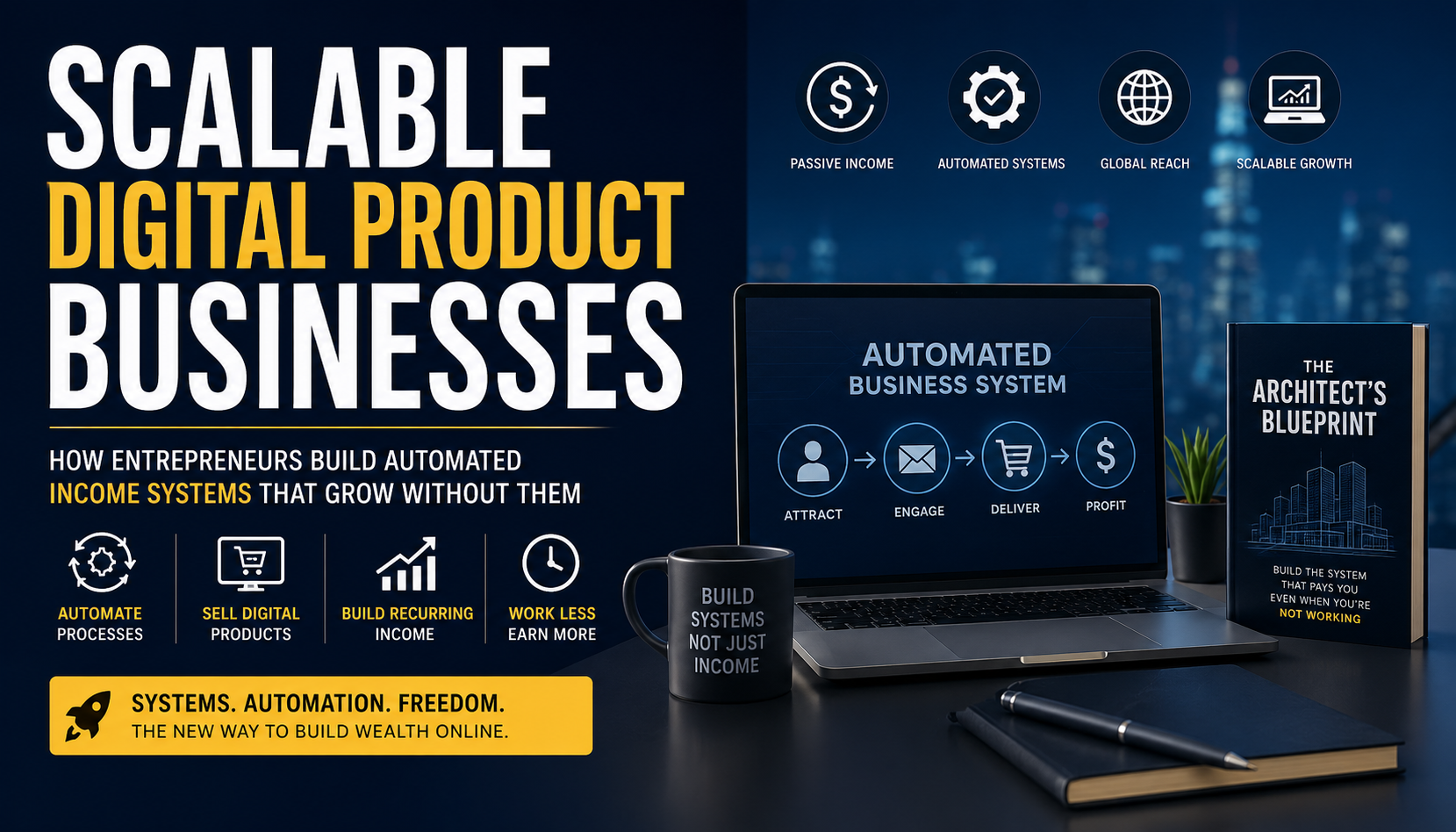
THE ARCHITECT’S BLUEPRINT: Build the System That Pays You — Even When You’re Not Working
The book explains how successful founders design business architectures capable of generating value continuously rather than depending entirely on daily effort.
Why Financial Visibility Is Essential Before Scaling
Many businesses attempt to scale without understanding their financial reality.
This creates enormous risk.
A company may generate significant revenue while losing money.
A founder may believe the business is healthy while hidden financial blind spots quietly destroy profitability.
Before scaling, every entrepreneur should answer:
- Which products generate the highest profit?
- What is the customer acquisition cost?
- What is the lifetime value of a customer?
- What expenses are growing fastest?
- Where are operational inefficiencies reducing profit?
Without clear answers, growth becomes dangerous.
A larger business with poor financial visibility simply creates larger financial problems.
This is why automation and financial monitoring are critical foundations for sustainable growth.
For a deeper understanding of this topic, entrepreneurs should study:
The Automated Wealth System: How to Eliminate Financial Blind Spots, Automate Your Business, and Build Continuous Income — Even If You’re Starting From Scratch
The book focuses on identifying financial blind spots and building automated systems that improve visibility and long-term profitability.
The Founder Bottleneck Problem
One of the biggest obstacles to growth is the founder.
This may sound surprising.
But many businesses become trapped because every decision depends on one person.
Common symptoms include:
- Employees constantly asking for approval
- Customers demanding direct founder involvement
- Operations stopping when the founder is unavailable
- Constant firefighting
At this stage, the founder becomes the bottleneck.
The business cannot grow beyond the founder’s personal capacity.
Successful companies solve this problem through documentation, automation, and delegation.
Instead of becoming more involved in every activity, founders create systems that reduce dependency on their direct intervention.
The goal is not to work harder.
The goal is to make the business smarter.
Why Automation Is the Foundation of Modern Growth
Automation is no longer optional.
It has become a competitive advantage.
Businesses that automate routine tasks can:
- Reduce costs
- Improve consistency
- Increase speed
- Eliminate human error
- Scale operations efficiently
Examples include:
Lead Generation
Automatically capturing and qualifying leads.
Customer Follow-Up
Automated email sequences.
Invoicing
Automated billing and payment reminders.
Reporting
Automated dashboards and business intelligence.
Customer Support
Knowledge bases and automated responses.
Automation allows founders to focus on strategic growth instead of repetitive tasks.
Entrepreneurs interested in implementing automation quickly should explore:
AUTOMATE YOUR BUSINESS IN 7 DAYS (NO CODING): Build a System That Runs Without You
The book provides practical frameworks for implementing business automation without requiring programming skills.
Building Processes Before Hiring
Many founders hire too early.
When processes are undocumented, new employees often create more complexity instead of reducing workload.
Before hiring, companies should define:
- Standard operating procedures
- Workflows
- Responsibilities
- Performance indicators
Documented processes create consistency.
They also reduce training time and improve operational efficiency.
The most scalable organizations treat documentation as a strategic asset.
Every process should be capable of being repeated by another person with minimal supervision.
This creates operational resilience and prepares the company for growth.
The Hidden Financial Blind Spots That Destroy Growth
Many entrepreneurs focus on revenue while ignoring the underlying financial systems that determine long-term success.
Common blind spots include:
- Poor cash flow forecasting
- Lack of expense tracking
- Unclear profit margins
- Hidden operational costs
- Customer concentration risk
- Uncontrolled growth expenses
- Lack of automated financial reporting
These issues often remain invisible until growth accelerates.
Unfortunately, by that stage, the damage may already be significant.
Understanding these risks is essential for entrepreneurs who want to build lasting wealth rather than temporary revenue.
A detailed analysis of these critical issues can be found in:
The 7 Financial Blind Spots That Keep Entrepreneurs Broke — And Why You Must Automate Your Business to Build Real Wealth
The framework helps entrepreneurs identify weaknesses that often prevent businesses from reaching their full financial potential.
Share this content:




Post Comment